Basics


Info Download

Advanced

v/v
V
V

Plot Download

Panasonic Strada CN-HDS700TD is a high-performance 2-DIN multimedia head unit known for its advanced digital signal processing (DSP) and built-in hard drive. Originally a Japanese market model, it remains popular in the used market for audiophiles seeking robust sound customization and a classic 7-inch touchscreen interface. Key Technical Specifications

The keyword "Panasonic Strada CN-HDS700TD verified" is more than a seller’s claim—it is a promise of transparency. But as with any vintage electronics, verification is only as good as the person testing it. Always request a video of the unit in operation: show the radio band scan, show the GPS acquiring satellites, show a DVD playing audio through all four channels.

: As a domestic Japanese model, the interface is primarily in Japanese. Users often use translation apps or a "globe" icon in the main menu to navigate submenus. Modern Upgrades

The is a 2-DIN hard disk drive (HDD) car navigation station originally released for the Japanese Domestic Market (JDM) in October 2007 . It is part of Panasonic's high-end "Strada" series, known for integrating advanced navigation with comprehensive audio-visual capabilities. Technical Specifications CN-HDS700TD

In the context of used electronics from Japan (sold via Yahoo Auctions Japan, Buyee, or specialist exporters like Beat-Sonic), is a critical sales term. For the CN-HDS700TD, verification would likely include:

Users searching for "verified" solutions often encounter specific hurdles related to this model's JDM origins and security features.

Disclaimer: This content is based on verified technical data for the CN-HDS700TD model. Hardware variations may exist depending on the specific production year.
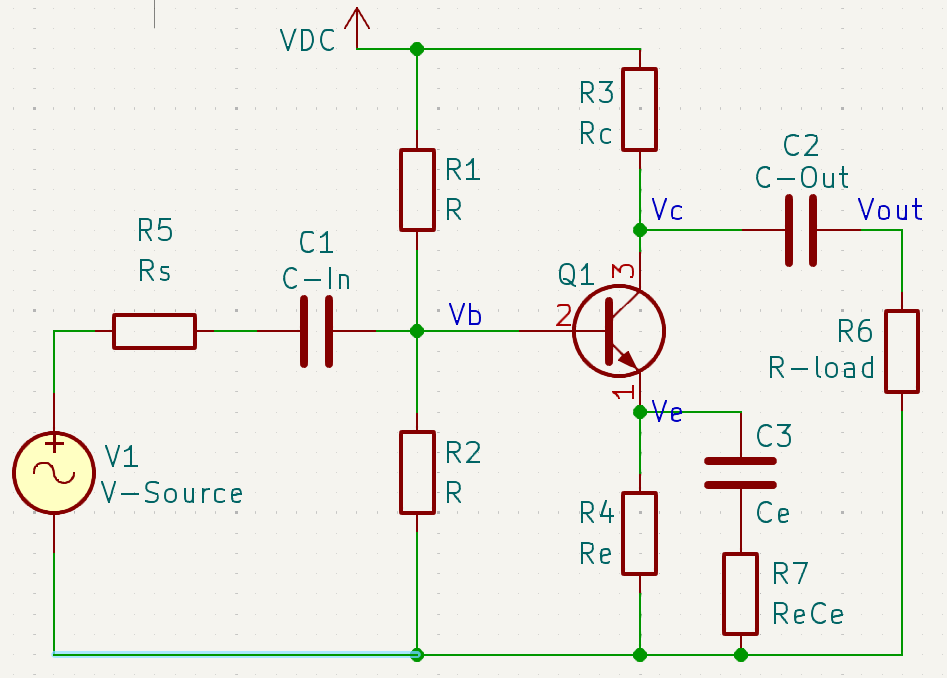
Disclaimer: This tool is provided for educational and illustrative purposes only. No guarantee is made regarding accuracy, suitability, or performance. Use at your own risk. - Copyright: ufelectronics.eu / Andreas Dyhrberg

×
Amplifier Schematic
×

There are different ways to calculate an amplifier, depending on what you want to achieve.

Maybe you want to achieve a certain gain, as far as possible (classic mode). Or you have a low Vcc to respect (modern mode). Or you work with analog audio amps (symmetry mode).

Depending on what you want to achieve and the way of calculating it. Some fields might become dependent on others, or the other way around.

Your above choise makes some input fields available for manipulation, while hiding others.


🎯 1. Target Gain (Av) — "Classic mode" panasonic strada cnhds700td verified

You care about how much your amplifier multiplies the input signal.

Set desired voltage gain and Rc voltage drop. Best for learning and simple amplifiers.

You say: “I want a gain of 10.”
The app adjusts resistors to try and match that.
You must give Av and Vrc (the voltage dropped across Rc).

Best for common emitter amplifiers.

✅ Default choice for most beginners and educational use. But as with any vintage electronics, verification is


⚡ 2. Target Emitter Voltage (Ve) — "Modern mode"

You care about setting a healthy DC bias point.

Prioritize stable biasing via Ve. Useful for low-voltage circuits or precision designs.

You say: “I want Ve = 0.5 V, to keep the transistor out of trouble.”
This makes sure your transistor stays in active mode.
Gain becomes whatever it turns out to be.

Ideal for common emitter amplifiers when the goal is to ensure proper biasing for low-voltage or precision circuits, and it’s also used in class AB amplifiers to prevent distortion Users often use translation apps or a "globe"

✅ Useful in low-voltage designs (e.g., 3.3V systems).


🧭 3. Target Collector Voltage (Vc) — "Symmetry mode"

You want to place the collector in the middle of the power rail.

Target Vc = Vcc/2 for maximum signal swing. Great for audio and analog signals.

You say: “Make Vc = Vcc/2” for maximum swing.
Useful for analog audio amps or symmetrical headroom.
Gain and Ve are outcomes.

Best for common collector amplifiers and class AB amplifiers.

✅ Best for signal integrity.

Panasonic Strada Cnhds700td Verified //free\\ «1080p»

Panasonic Strada CN-HDS700TD is a high-performance 2-DIN multimedia head unit known for its advanced digital signal processing (DSP) and built-in hard drive. Originally a Japanese market model, it remains popular in the used market for audiophiles seeking robust sound customization and a classic 7-inch touchscreen interface. Key Technical Specifications

The keyword "Panasonic Strada CN-HDS700TD verified" is more than a seller’s claim—it is a promise of transparency. But as with any vintage electronics, verification is only as good as the person testing it. Always request a video of the unit in operation: show the radio band scan, show the GPS acquiring satellites, show a DVD playing audio through all four channels.

: As a domestic Japanese model, the interface is primarily in Japanese. Users often use translation apps or a "globe" icon in the main menu to navigate submenus. Modern Upgrades

The is a 2-DIN hard disk drive (HDD) car navigation station originally released for the Japanese Domestic Market (JDM) in October 2007 . It is part of Panasonic's high-end "Strada" series, known for integrating advanced navigation with comprehensive audio-visual capabilities. Technical Specifications CN-HDS700TD

In the context of used electronics from Japan (sold via Yahoo Auctions Japan, Buyee, or specialist exporters like Beat-Sonic), is a critical sales term. For the CN-HDS700TD, verification would likely include:

Users searching for "verified" solutions often encounter specific hurdles related to this model's JDM origins and security features.

Disclaimer: This content is based on verified technical data for the CN-HDS700TD model. Hardware variations may exist depending on the specific production year.